Bar, Wire Rod & Section Rolls

Roll shafts are mostly processed and heat-treated using 42CrMo material, which belongs to ultra-high strength steel. Forging can eliminate defects such as casting porosity generated during metal smelting and optimize the microstructure.
Share:
Material Characteristics
This material has high strength and toughness, good hardenability, no obvious temper brittleness, and small deformation during quenching. After quenching and tempering, it has a high fatigue limit, excellent resistance to repeated impact, good low-temperature impact toughness, and high creep strength and endurance strength at high temperatures. It features dense internal structure, good plasticity, customizable design, and excellent load-bearing performance.
Application Scope
Suitable for combined roll shafts of universal rolling mills, and various shafts for vehicles and ships.
Chemical Composition
|
Material Code |
C |
Si |
Mn |
Cr |
Ni |
Mo |
P |
S |
|
AD160 |
1.5-1.7 |
0.3-0.6 |
0.7-1.1 |
0.8-1.2 |
- |
0.2-0.6 |
≤0.035 |
≤0.030 |
|
AD160I |
1.5-1.7 |
0.3-0.6 |
0.8-1.3 |
0.8-2.0 |
≥0.2 |
0.2-0.6 |
≤0.035 |
≤0.030 |
|
AD180 |
1.7-1.9 |
0.3-0.8 |
0.6-1.1 |
0.8-1.5 |
0.5-2.0 |
0.2-0.6 |
≤0.035 |
≤0.030 |
|
AD190 |
1.8-2.0 |
0.3-0.8 |
0.6-1.2 |
1.5-3.5 |
1.0-2.0 |
0.2-0.6 |
≤0.035 |
≤0.030 |
|
AD200 |
1.9-2.1 |
0.3-0.8 |
0.8-1.2 |
0.6-2.0 |
0.6-2.5 |
0.2-0.8 |
≤0.035 |
≤0.030 |
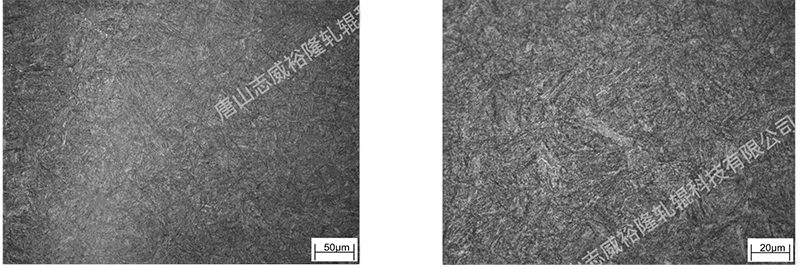
Microstructure and Properties
|
Roll Body Hardness |
Hardness Uniformity |
Hardness Drop (HSD) |
Roll Neck Hardness (HSD) |
Tensile Strength (MPa) |
|
50-65 |
3-5 |
3-5 |
≤50 |
≥600 |
Related Products